
Herderite
| CaBePO |
| (F,OH) |
- Mohs hardness
- 5–5.5
- Refractive index
- 1.587–1.642
- Specific gravity
- 2.90–3.02
- Birefringence
- 0.028–0.032
- Dispersion
- ≈0.015 (estimated)
- Crystal system
- Monoclinic
- Optical character
- Biaxial
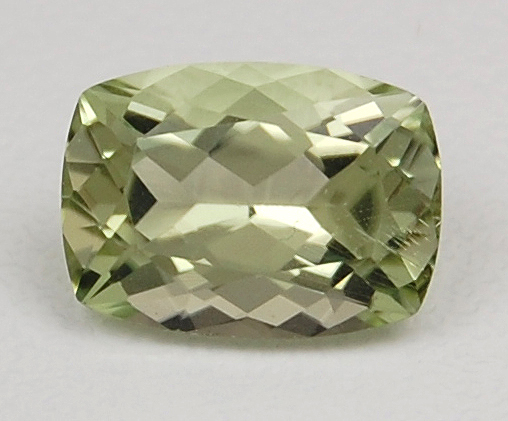
Herderite forms good single crystals, twinning is common. Gem material is transparent and has a range of colours, including yellow, blue, pink, violet and green, some crystals are colourless.
Clear crystals are faceted into attractive gems.

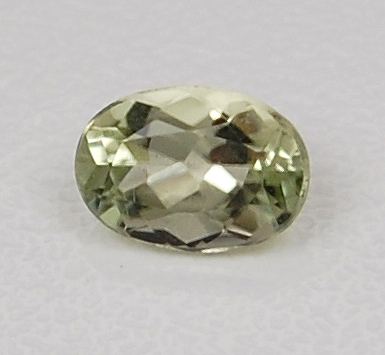
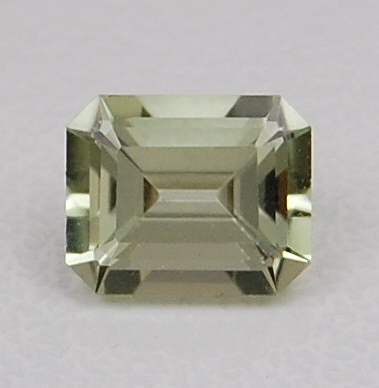
Colours
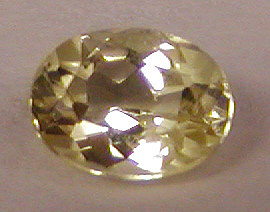
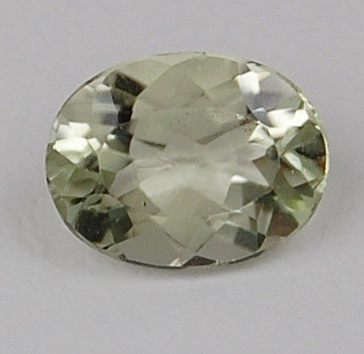
The colours of Herderite on this site, from 11 graded photos. Choose a colour to see all of its photos.
Cuts
-
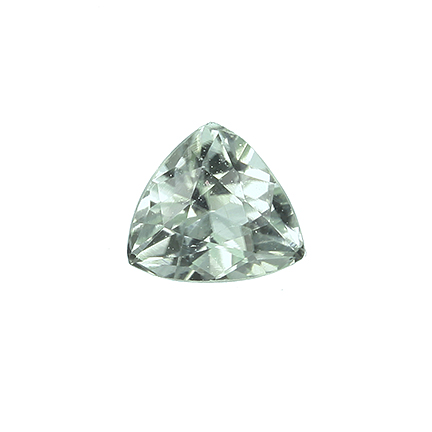 Trilliant
7 photos
-
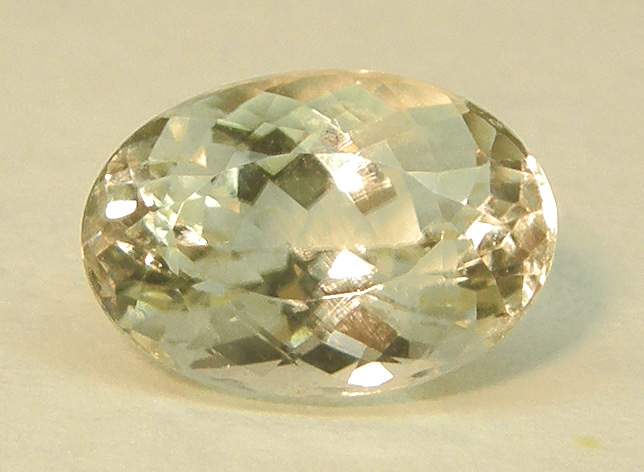 Oval
5 photos
-
Cushion
1 photo
-
 Oval Brilliant
1 photo
-
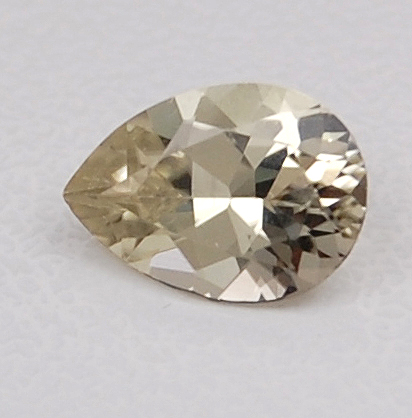 Pear
1 photo
-
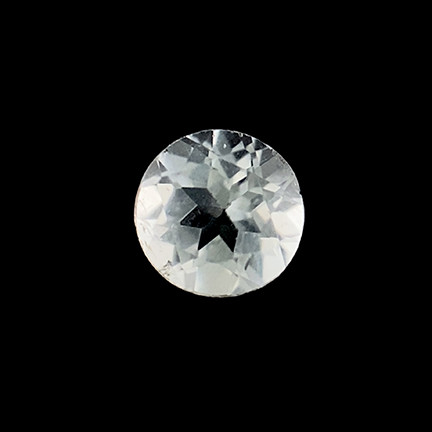 Round Brilliant
1 photo
-
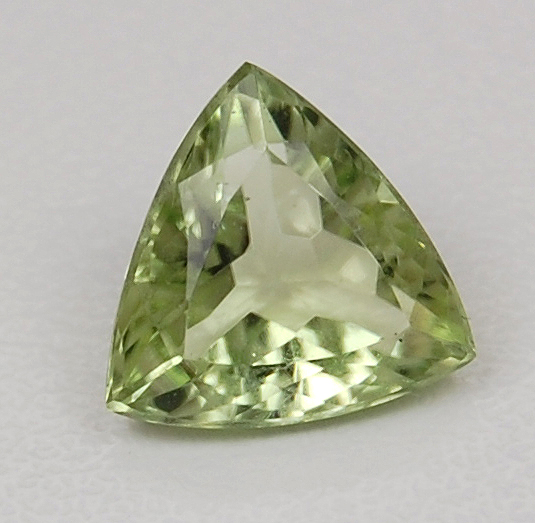 Trillion
1 photo
Sizes
Weights of the 21 photographed Herderite gems on this site, a guide to how readily it is found in larger sizes. The scale is logarithmic. Choose a bar to see those gems.
Have a larger Herderite? Add a photo.
Identification notes
From the Gray Gem ID Database: Gadolinite, Herderite.
Herderite forms good single crystals, twinning is common. Gem material is transparent and has a range of colous, including yellow, blue, pink, violet and green, some crystals are colorless. Clear crystals are faceted into attractive gems. Some stones may show a weak change-of-color. The most common form of herderite is actually hydroxylherderite.
Name: Named by Wilhelm Haidinger in 1828 in honor of Siegmund August Wolfgang von Herder [1776–1838], a mining official in Freiberg, Saxony, Germany.
- Rarity
- Rare
- Chemical class
- Phosphate
- Formula
- CaBe(PO₄)F
- Critical angle (°)
- 40.0
- Doubling
- 0.013 mm per 1 mm depth (approx.)
- Crystal class
- Prismatic
Care
- Heat
- low
References (1)
- Anthony, J.W., Bideaux, R.A., Bladh, K.W. and Nichols, M.C. (1990–2003) Handbook of Mineralogy. Chantilly, VA, Mineralogical Society of America, 5 Vols.
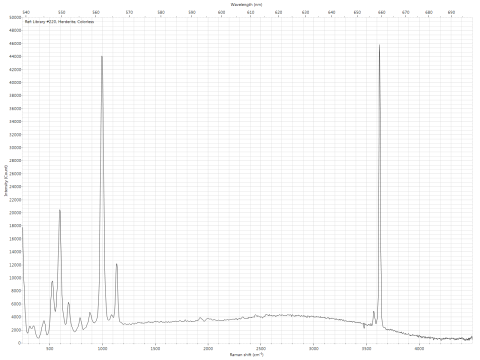
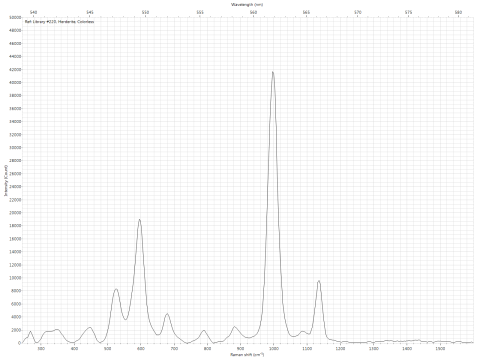
Reference spectra
2 spectra of documented Herderite reference stones (1 PL, 1 Raman). From the Gray Gem ID Database.
General information
| Chemical Formula |
|
|---|
Physical properties
| Mohs Hardness | 5 to 5.5, Blue Chart Gem Identification (2010) More from other references |
|---|---|
| Specific Gravity | 2.90 to 3.02, Blue Chart Gem Identification (2010) More from other references |
| Cleavage Quality | Indistinct, Gemstones (2009) |
| Fracture | Sub-Conchoidal, Gemstones (2009) |
Optical properties
| Refractive Index | 1.587 to 1.642, Blue Chart Gem Identification (2010) More from other references |
|---|---|
| Optical Character | Biaxial/+,-, Blue Chart Gem Identification (2010) More from other references |
| Birefringence | 0.028 to 0.032, Blue Chart Gem Identification (2010) More from other references |
| Dispersion | ≈0.015 (estimated), Dispersion estimated from refractive index and composition (2026) Estimated by gemdat.org from the refractive index (1.615) and composition, using 142 gems with measured dispersion. Not a measurement: half of such estimates are within 11% of the measured value, some are further out.More from other references |
Colour
| Colour (General) | Greyish blue, colourless, pale green, yellowish., Gemstones of the world (2001) More from other references |
|---|---|
| Transparency | Transparent,Translucent, Gemstones of the world (2001) More from other references |
| Lustre | Vitreous, Gemstones of the world (2001) More from other references |
Fluorescence & other light emissions
| Fluorescence (General) | Commonly greenish to violet, Blue Chart Gem Identification (2010) More from other references |
|---|---|
| Fluorescence (Short Wave UV) | Some specimens exhibit moderate green fluorescence, Gemstones (2009) |
| Fluorescence (Long-Wave UV) | Some specimens fluoresce deep-blue or moderate green., Gemstones (2009) More from other references |
| Phosphorescence | Some specimens are reported to have shown persistent phosphorescence, Gems, Sixth Edition (2006) |
Crystallography
| Crystal System | Monoclinic, Blue Chart Gem Identification (2010) More from other references |
|---|---|
| Habit | Pseudo-orthorhombic crystals, Gems, Sixth Edition (2006) More from other references |
Geological environment
| Where found: | Is believed to occur in complex granite pegmatites, Gems, Sixth Edition (2006) |
|---|
Localities
2 of 2 localities mapped · dashed orange markers are approximate · compare with other gems on the map
| |||||||||