
Actinolite
| Ca |
| (Mg,Fe) |
| Si |
| O |
| (OH) |
|
- Mohs hardness
- 5.5–6
- Refractive index
- 1.6–1.63
- Specific gravity
- 3.03–3.07
- Birefringence
- 0.03
- Dispersion
- ≈0.015 (estimated)
- Crystal system
- Monoclinic
- Optical character
- Biaxial
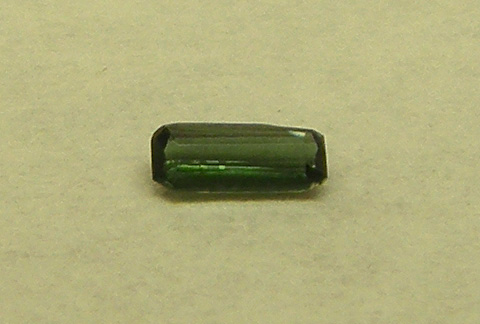
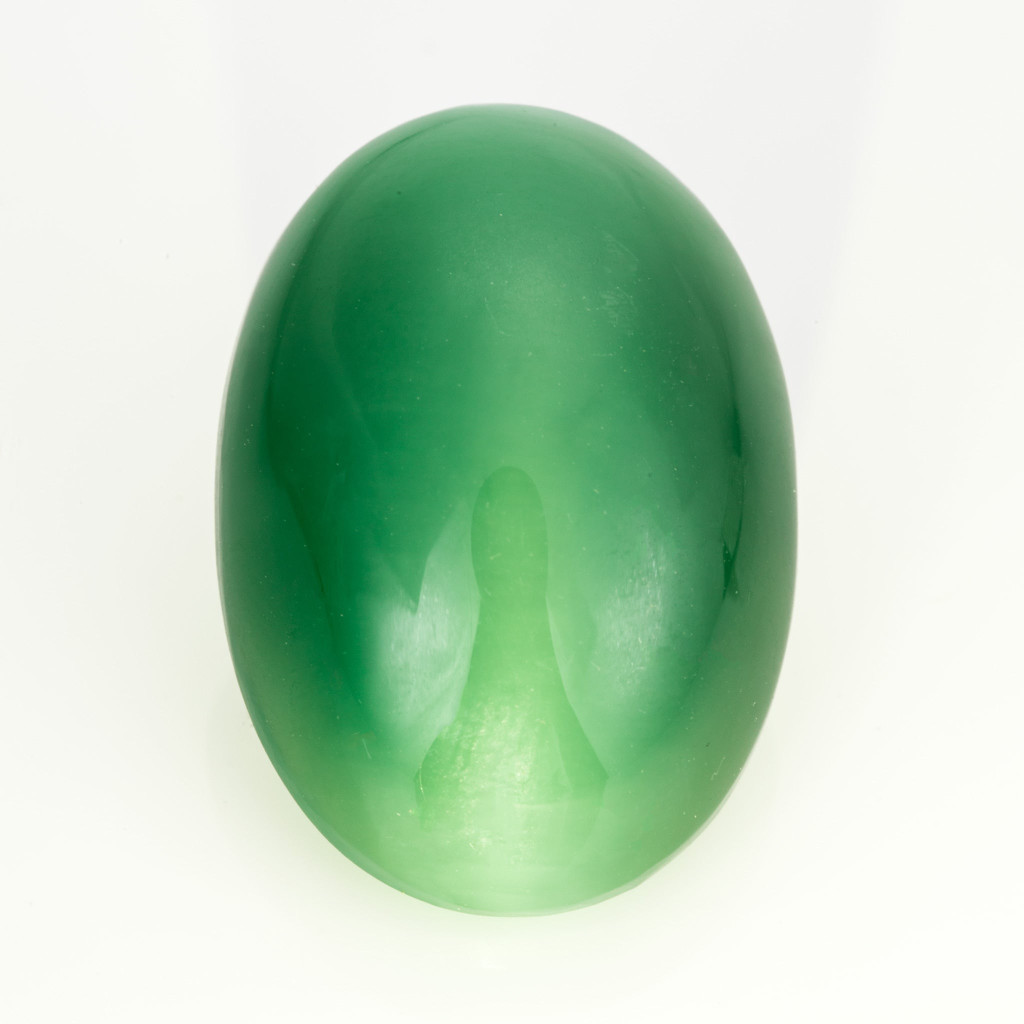
Chatoyant, translucent to opaque, green to yellowish green colour stones are cut into cabochons and called Actinolite cat's eye. Transparent well-developed crystals of actinolite are rare and are faceted into small attractive gems for collectors.

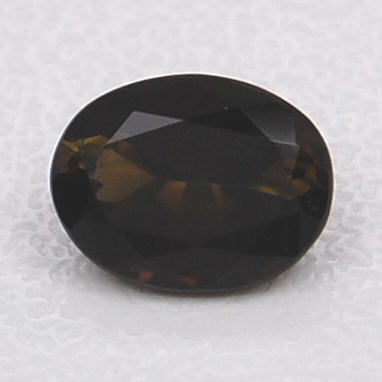
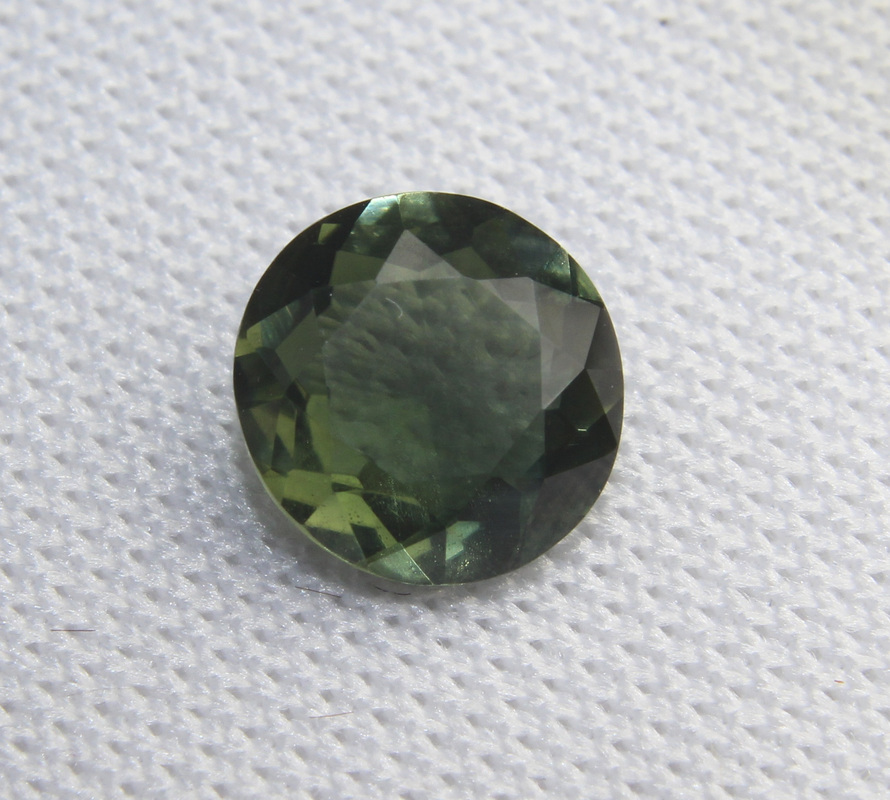
Colours
The colours of Actinolite on this site, from 4 graded photos. Choose a colour to see all of its photos.
Cuts
Sizes
Weights of the 5 photographed Actinolite gems on this site, a guide to how readily it is found in larger sizes. The scale is logarithmic. Choose a bar to see those gems.
Have a larger Actinolite? Add a photo.
Identification notes
From the Gray Gem ID Database: Amphibole, Actinolite.
Name: Named in 1794 by Richard Kirwan from the Greek ακτίνα (’aktina’) for "ray" and λίθος (’lithos’) for "stone," in allusion to the fibrous nature of the original specimens.
- Rarity
- Uncommon
- Chemical class
- Silicate
- Formula
- Ca₂(Mg,Fe²⁺)₅(Si₈O₂₂)(OH)₂
- Critical angle (°)
- 38.3
- Dispersion (B–G)
- Low
- Doubling
- 0.009 mm per 1 mm depth (approx.)
- Streak
- White
- Phenomena
- Silky, Vitreous, Chatoyancy
- Crystal class
- Prismatic
Care
- Heat
- Poor
References (1)
- Anthony, J.W., Bideaux, R.A., Bladh, K.W. and Nichols, M.C. (1990–2003) Handbook of Mineralogy. Chantilly, VA, Mineralogical Society of America, 5 Vols.
Reference spectra
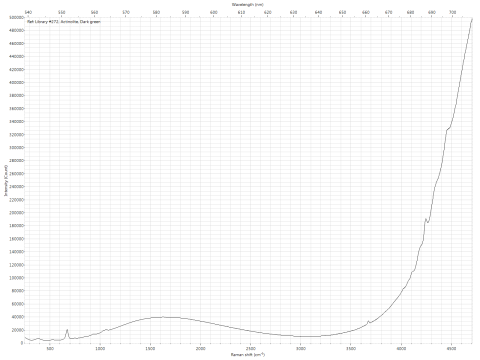
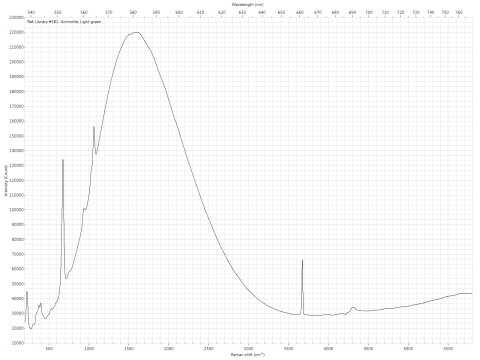
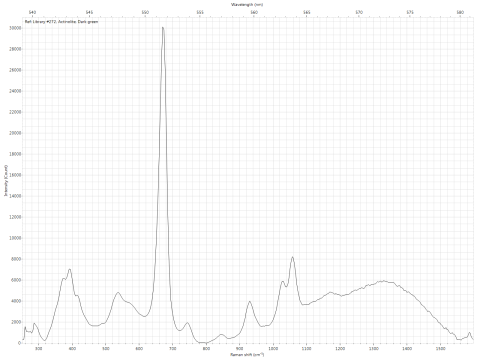
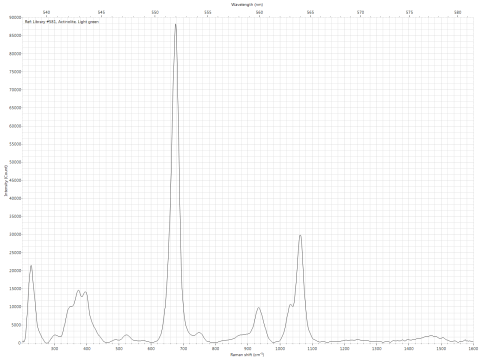
4 spectra of documented Actinolite reference stones (2 PL, 2 Raman). From the Gray Gem ID Database.
General information
| Varieties/Types: | Smaragdite - An emerald-green actinolite. | |||||||||||||||||||||
|---|---|---|---|---|---|---|---|---|---|---|---|---|---|---|---|---|---|---|---|---|---|---|
| Chemical Formula |
|
Physical properties
| Mohs Hardness | 5.5 to 6, Gemstones of the world (2001) More from other references |
|---|---|
| Specific Gravity | 3.03 to 3.07, Gemstones of the world (2001) More from other references |
| Tenacity | Brittle, Handbook of Mineralogy (2001) Tough in fibrous aggregatesMore from other references |
| Cleavage Quality | Perfect, Blue Chart Gem Identification (2010) More from other references |
| Fracture | Uneven, Gemstones (2009) More from other references |
Optical properties
| Refractive Index | 1.6 to 1.63Gemmologie (2000) Zeitschrift der Deutschen Gemmologischen Gesellschaf More from other references |
|---|---|
| Optical Character | Biaxial/-, Blue Chart Gem Identification (2010) More from other references |
| Birefringence | 0.03Gemmologie (2000) Zeitschrift der Deutschen Gemmologischen Gesellschaf More from other references |
| Pleochroism | Distinct: yellow-green - light green - blue-green, Blue Chart Gem Identification (2010) More from other references |
| Dispersion | ≈0.015 (estimated), Dispersion estimated from refractive index and composition (2026) Estimated by gemdat.org from the refractive index (1.615) and composition, using 142 gems with measured dispersion. Not a measurement: half of such estimates are within 11% of the measured value, some are further out.More from other references |
Colour
| Colour (General) | Green, brown, gray, white and colourless., Gemstones of the world (2001) More from other references |
|---|---|
| Causes of Colour | Yellowish green to green (nephrite), Fe2+ in octahedral coordination, Pragmatic Spectroscopy For Gemologists (2011) |
| Transparency | Transparent, Gemmological Tables (2004) More from other references |
| Lustre | Vitreous, Gemstones (2009) |
Crystallography
| Crystal System | Monoclinic, Blue Chart Gem Identification (2010) More from other references |
|---|---|
| Habit | Long bladed crystals, Gemstones (2009) More from other references |
Geological environment
| Where found: | Produced by low-grade regional or contact metamorphism of magnesium carbonate, mafic, or ultramafic rocks; also in glaucophane bearing blueschists., Handbook of Mineralogy (2001) |
|---|