
Ruby
A red gem variety of corundum
| Al |
| O |
|
- Mohs hardness
- 9
- Refractive index
- 1.762–1.778
- Specific gravity
- 3.97–4.05
- Birefringence
- 0.008
- Dispersion
- 0.018
- Crystal system
- Trigonal
- Optical character
- Uniaxial
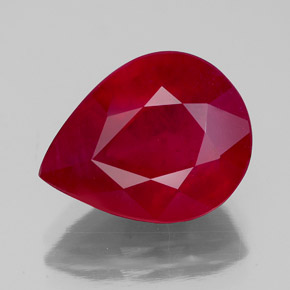
The red colour can vary within each individual deposit, therefore the determination of the source from the colour is not possible. The red colour is caused by chromium, and in case of brownish tones due to presence of iron.
The rough stone has dull and greasy lustre.
Inclusions are common and often indicate that the stone is natural.
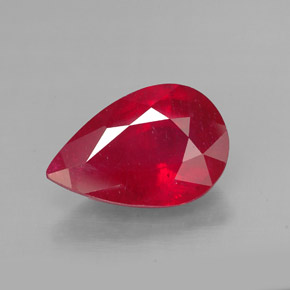
Colours
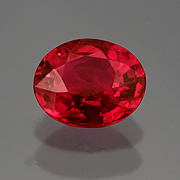
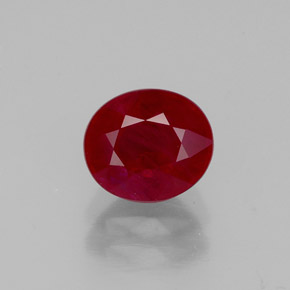
The colours of Ruby on this site, from 98 graded photos. Choose a colour to see all of its photos.
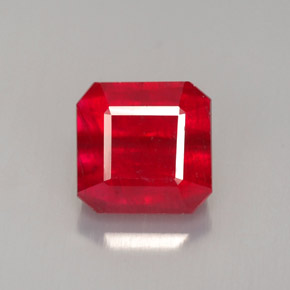

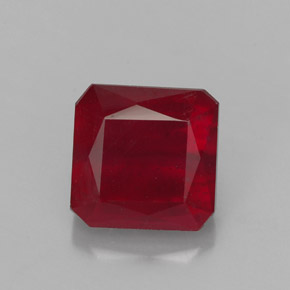
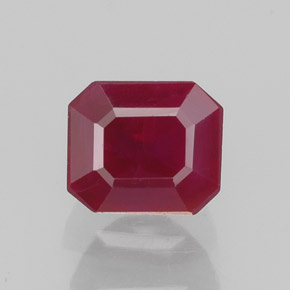
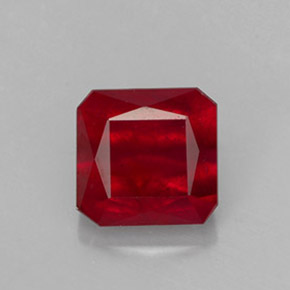
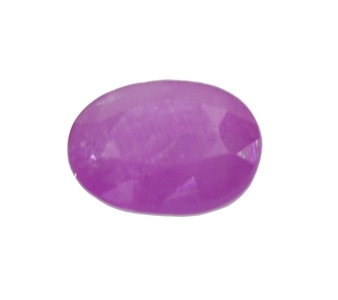
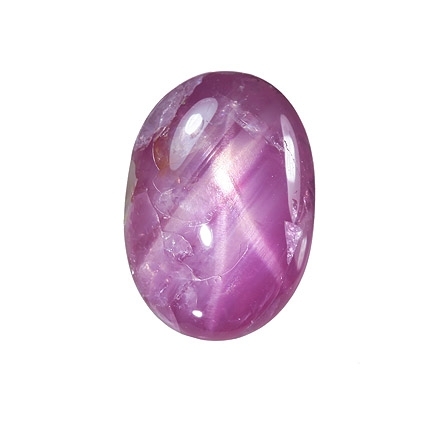
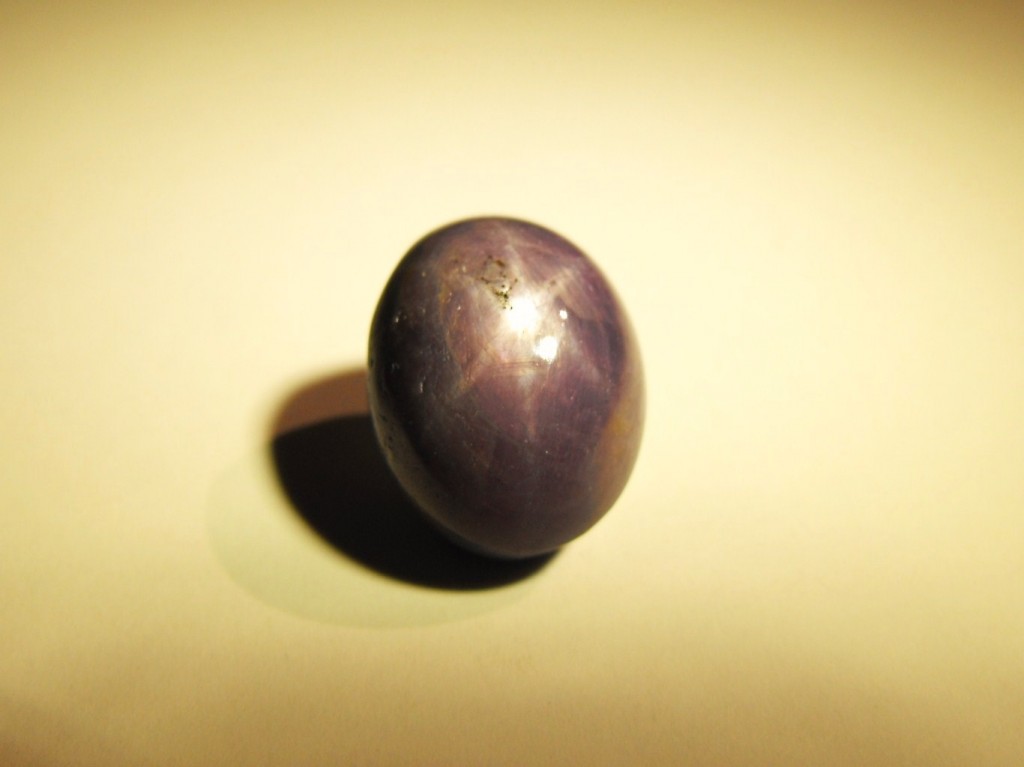
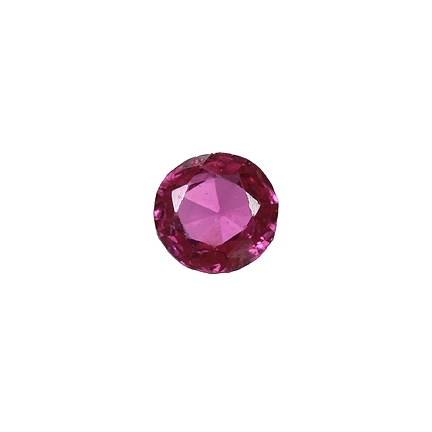
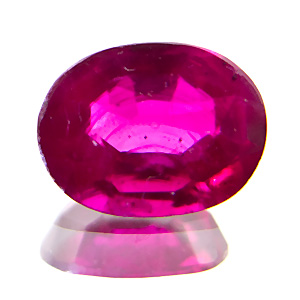
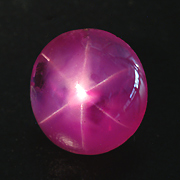
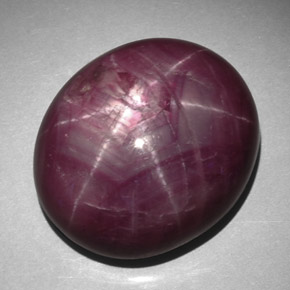
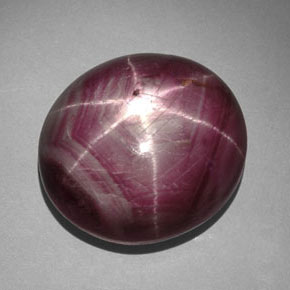
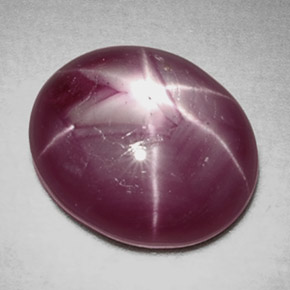
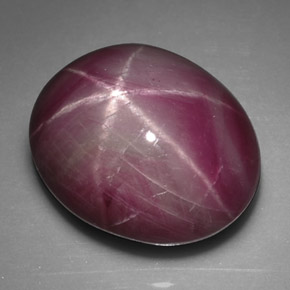
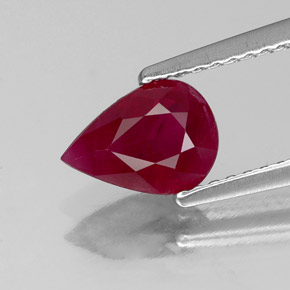
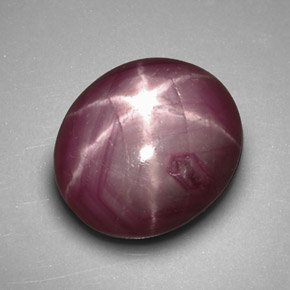
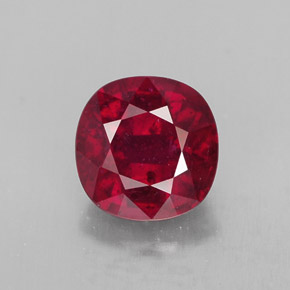
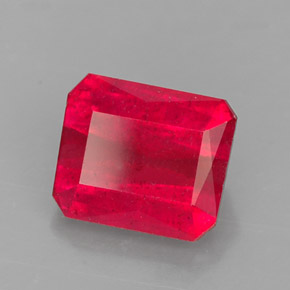
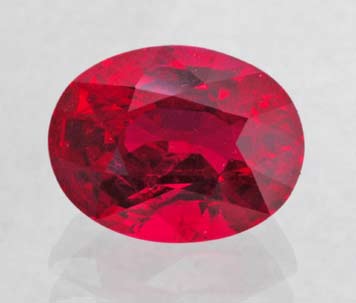
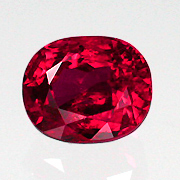
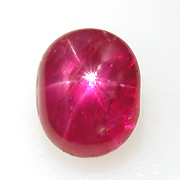

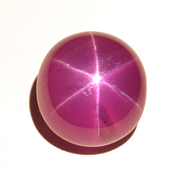
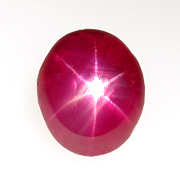
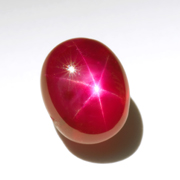
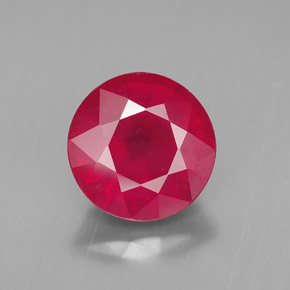
Cuts
-
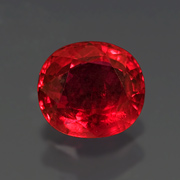 Oval
44 photos
-
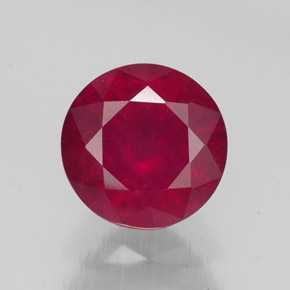 Round
26 photos
-
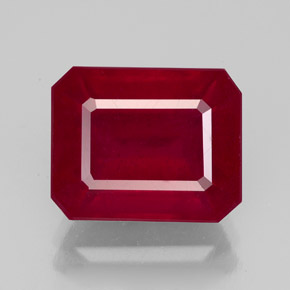 Octagon
16 photos
-
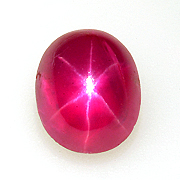 Cabochon
13 photos
-
Pear
12 photos
-
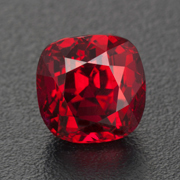 Cushion
10 photos
-
 Oval Cabochon
9 photos
-
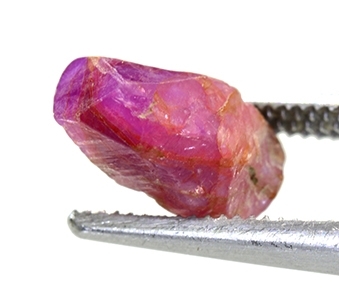 Uncut
7 photos
-
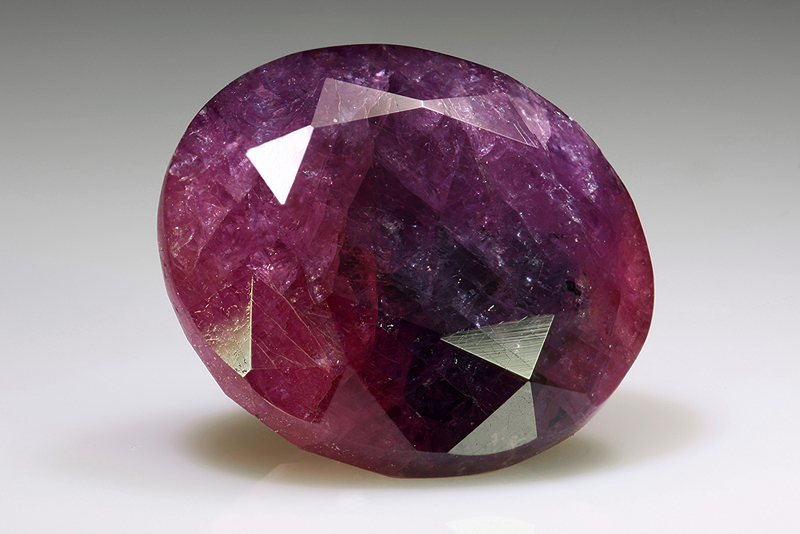 Round Brilliant
2 photos
-
 Sphere
2 photos
-
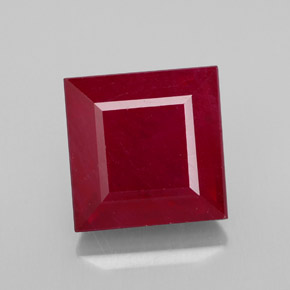 Square
2 photos
-
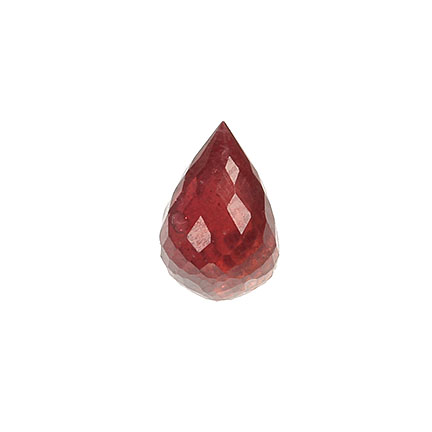 Briolette
1 photo
-
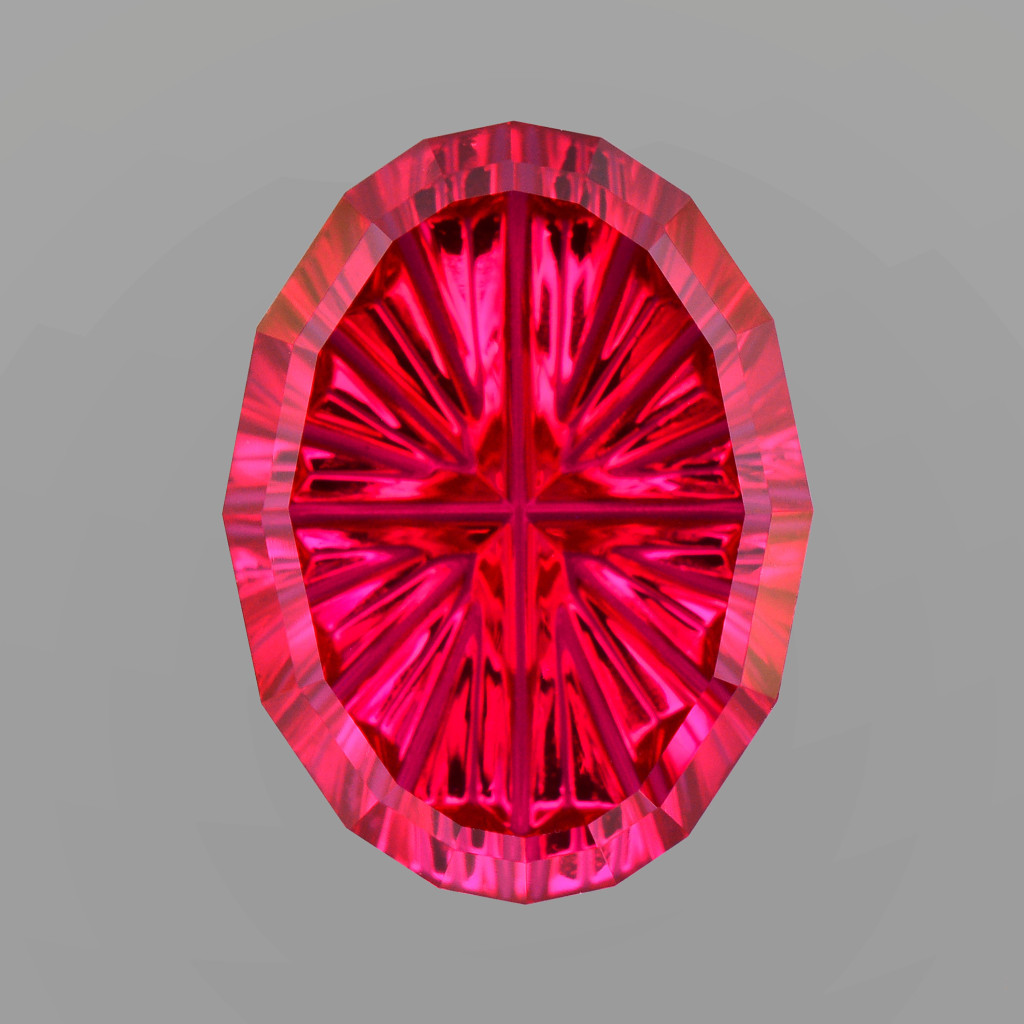 Freeform
1 photo
-
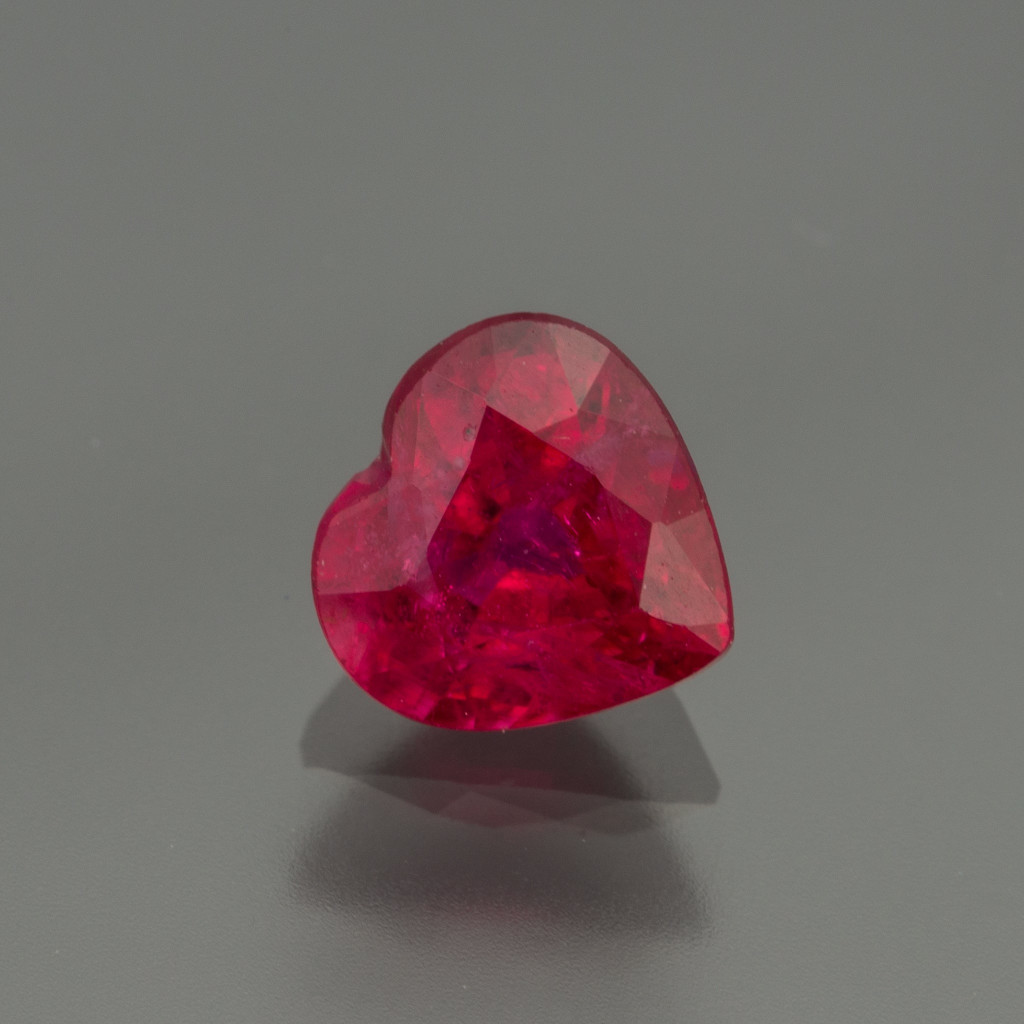 Heart
1 photo
-
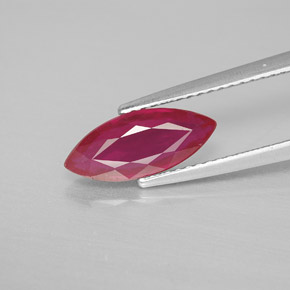 Marquise
1 photo
-
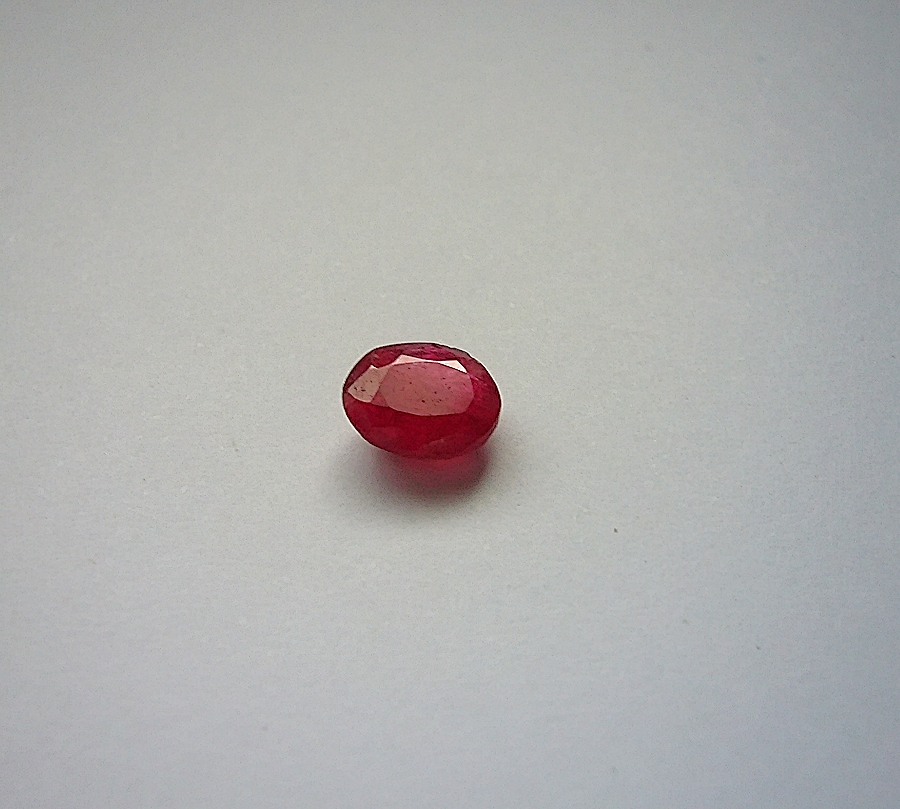 Oval Brilliant
1 photo
-
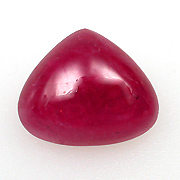 Pear Cabochon
1 photo
-
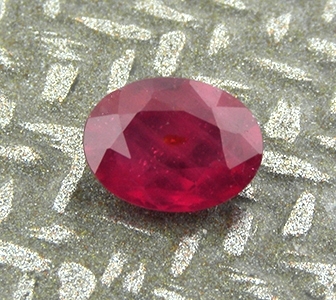 Step
1 photo
-
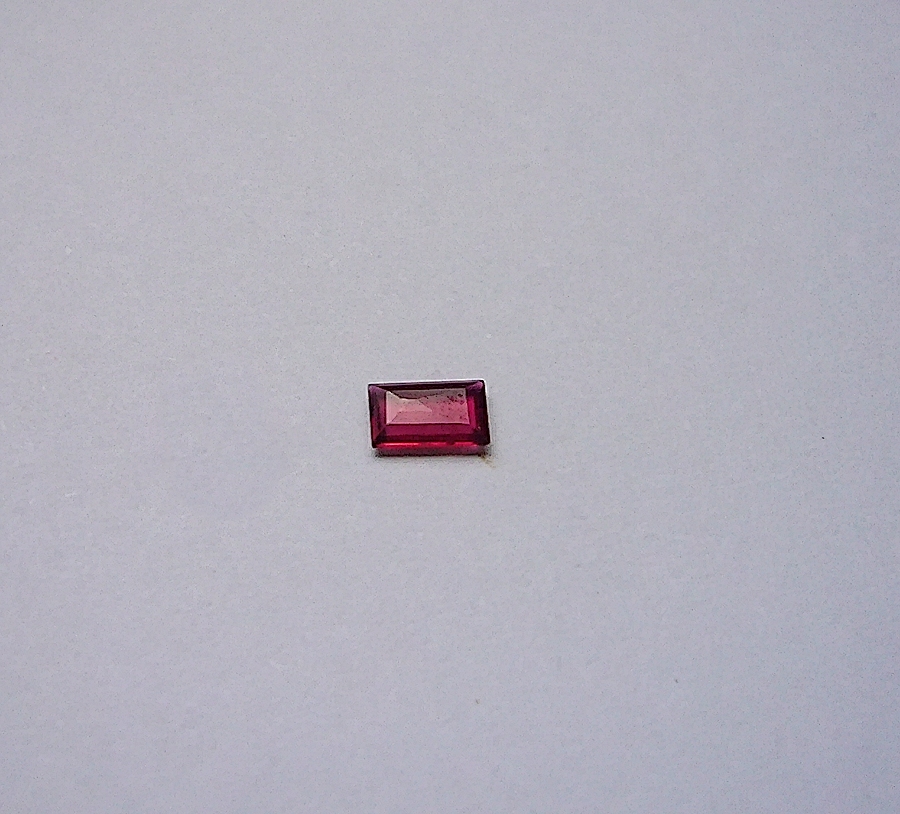 Table
1 photo
-
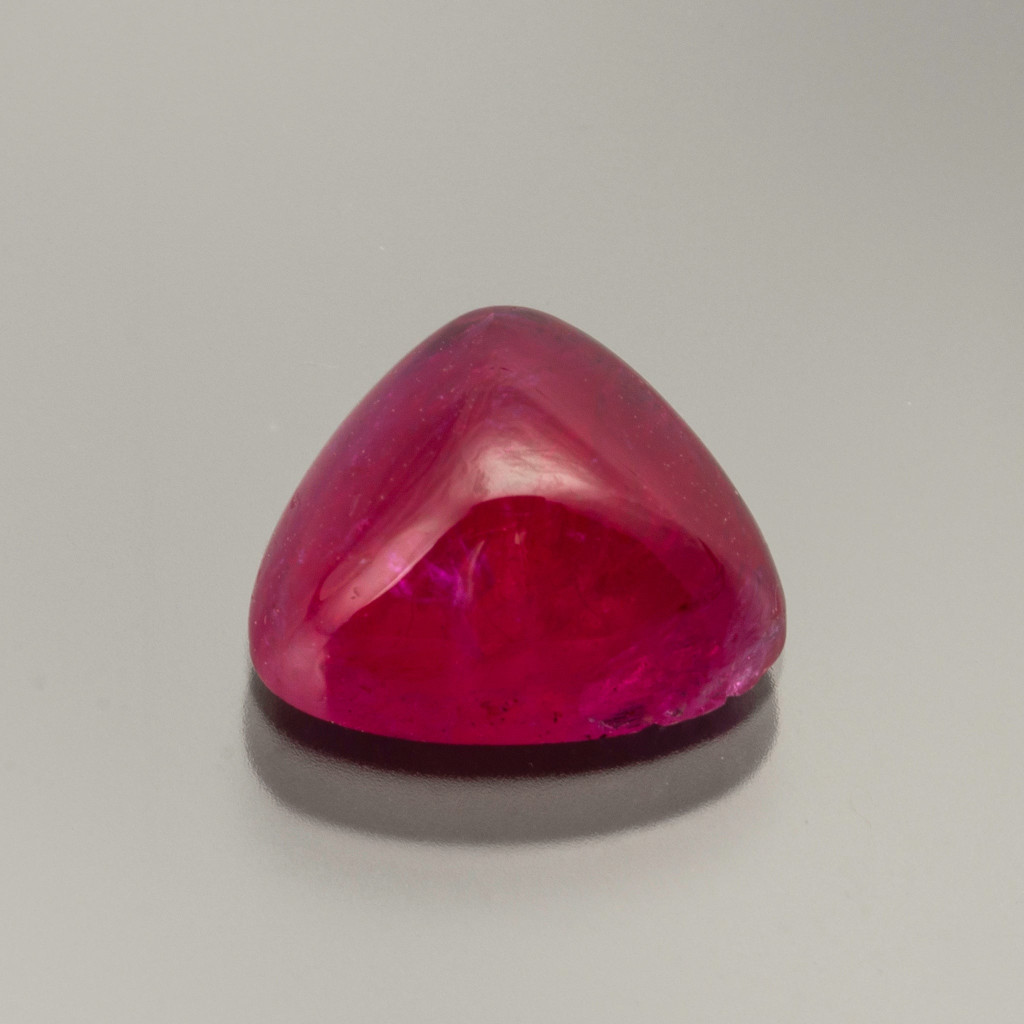 Triangle
1 photo
-
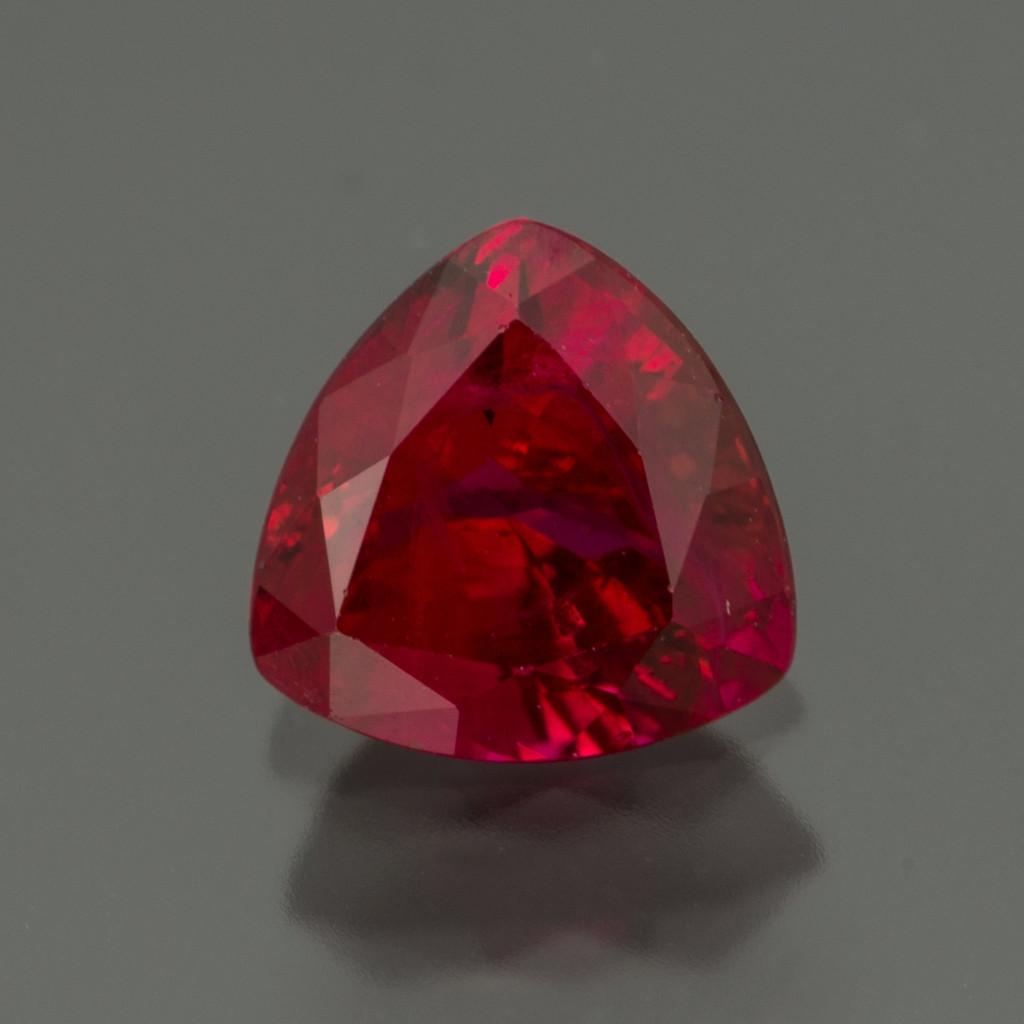 Trillion
1 photo
-
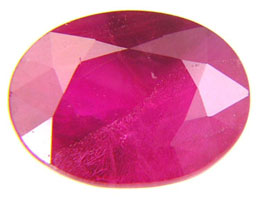 Whirl
1 photo
Sizes
Weights of the 214 photographed Ruby gems on this site, a guide to how readily it is found in larger sizes. The scale is logarithmic. Choose a bar to see those gems.
0.20.5125102050100
carats
- Lightest
- 0.12 ct
- Typical
- 1.81 ct
- Heaviest
- 100.32 ct
- Eminent Star
- 6,465 ct
- Ecce Homo Star Ruby
- 2,890 ct
- Edwardes Ruby
- 167 ct
- Rosser Reeves Star Ruby
- 138.7 ct
Have a larger Ruby? Add a photo.
Reference spectra
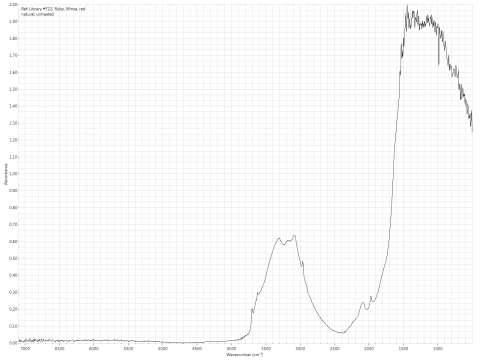
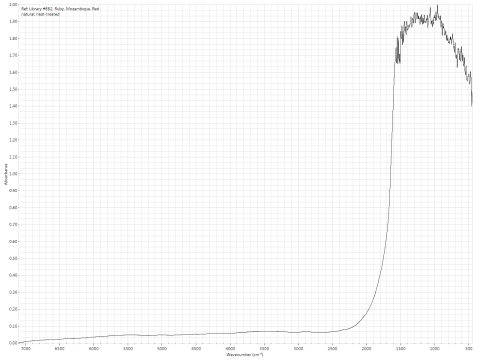
2 spectra of documented Ruby reference stones (2 FTIR), including 1 treated. From the Gray Gem ID Database.
General information
| A variety or type of: | Corundum | |||||||||
|---|---|---|---|---|---|---|---|---|---|---|
| Varieties/Types: | Flux-Grown Ruby - A synthetic ruby grown from alumina dissolved in a molten flux. Geneva Ruby - Earliest synthetic rubies (circa 1885) created in Geneva. Star Ruby - A chatoyant ruby showing asterism. Verneuil Ruby - A synthetic ruby created using the flame fusion process. | |||||||||
| Chemical Formula |
|
Physical properties
| Mohs Hardness | 9, Blue Chart Gem Identification (2010) More from other references |
|---|---|
| Specific Gravity | 3.97 to 4.05, Gemstones of the world (2001) More from other references |
| Tenacity | Brittle, Gems, Sixth Edition (2006) |
| Cleavage Quality | None, Gems, Sixth Edition (2006) |
| Fracture | Conchoidal,Splintery, Gemstones of the world (2001) Small conchoidalMore from other references |
Optical properties
| Refractive Index | 1.762 to 1.778, Gemstones of the world (2001) More from other references |
|---|---|
| Optical Character | Uniaxial/-, Gems, Sixth Edition (2006) |
| Birefringence | 0.008, Gems, Sixth Edition (2006) More from other references |
| Pleochroism | Strong: purplish-red - orangy-red, Blue Chart Gem Identification (2010) More from other references |
| Dispersion | 0.018, Gems, Sixth Edition (2006) More from other references |
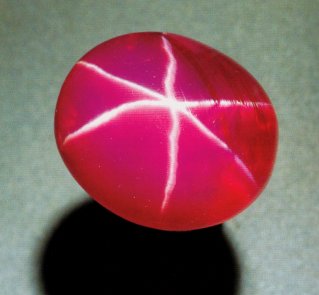
| Chatoyancy | Star 6, Blue Chart Gem Identification (2010) |
Colour
| Colour (General) | Near colourless through pink through all shades of red to a deep crimson., Gems, Sixth Edition (2006) |
|---|---|
| Colour (Chelsea Filter) | Fluorescent red, Blue Chart Gem Identification (2010) |
| Causes of Colour | Red, Cr3+ in octahedral coordination with minor contributions of V3+ and Fe3+ in octahedral coordination., Pragmatic Spectroscopy For Gemologists (2011) |
| Transparency | Transparent,Translucent,Opaque, Gemstones of the world (2001) More from other references |
| Lustre | Subadamantine,Vitreous,Pearly, Gems, Sixth Edition (2006) Pearly on parting surfaces |
Fluorescence & other light emissions
| Fluorescence (Short Wave UV) | Inert to (strong) red, Blue Chart Gem Identification (2010) |
|---|---|
| Fluorescence (Long-Wave UV) | Moderate to strong red. A red-inhibiting filter may reveal an orange fluorescence., Blue Chart Gem Identification (2010) More from other references |
Crystallography
| Crystal System | Trigonal, Gems, Sixth Edition (2006) |
|---|---|
| Habit | Hexagonal prisms or tables, rhombohedrons, Gemstones of the world (2001) More from other references |
Geological environment
| Where found: | The host rocks of ruby are metamorphic dolomite marbles, gneiss and amphibolite. The yield of rubies from such primary deposits is not economically profitable. Rather secondary alluvial deposits are worked. Because of its high density, ruby is normally separated through the washing of river gravels, sands, and soil, then concentrated, and finally picked out by hand., Gemstones of the world (2001) |
|---|
Inclusions
| “Silk” intersecting at 60°-120° on the same plane and other guest crystals. Heat-treated ruby: flux remnants in partially healed surface reaching cracks sometimes very similar to fingerprint pattern seen in synthetic flux; dot-like partially dissolved rutile needles (silk), rounded melted crystals - Blue Chart Gem Identification, Herve Nicolas Lazzarelli, 2010, p. 2 Inclusions are common. They are not always indicative of lower quality, but show the difference between a natural and synthetic stone. The type of inclusion (minerals, growth structures, canals or other cavities) often indicates the source area. Included rutile needles bring about either soft sheen (silk) or, when cut in cabochon, the rare cat's eye effect, or more often the very desirable asterism - a 6-rayed star, which shimmers over the surface of the stone when it is moved. - Gemstones of the world, Walter Schumann, 2001, p 82 | |||||
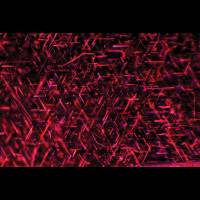
Field of view 3mm | |||||
Treatments
Simulants
Synthetic
Spectra
Significant stones
| ||||||||||||||||||||||||||||||||||||||||||||||


Localities
201 of 205 localities mapped · dashed orange markers are approximate · compare with other gems on the map
| ||||||||||||||||||||||||||||||||||||||||||||||||||||||||||||||||||||||||||||||||||||||||||||||||||||||||||||||||||||||||||||||||||||||||||||||||||||||||||||||||||||||||||||||||||||||||||||||||||||||||||||||||||||||||||||||||||||||||||||||||||||||||||||||||||||||||||||||||||||||||||||||||||||||||||||||||||||||||||||||||||||||||||||||||||||||||||||||||||||||||||||||||||||||||||||||||||||||||||||||||||||||||||||||||||||||||||||||||||||||||||||||||||||||||||||||||||||||||||||||||||||
Questions about Ruby
- Why does a one-carat ruby look smaller than a one-carat diamond? LM - Seattle, Washington, USA
- What is a lead-glass filled ruby? TC - Mong Kok, Hong Kong
- Why were so many famous 'rubies' actually spinels? AH - London, UK
- What does 'pigeon's blood' mean for a ruby? NS - Bangkok, Thailand
- What's the difference between Ruby and Pink Sapphire? RD - Reading, UK